
Choosing Smart Health Coverage Matters More Than Ever
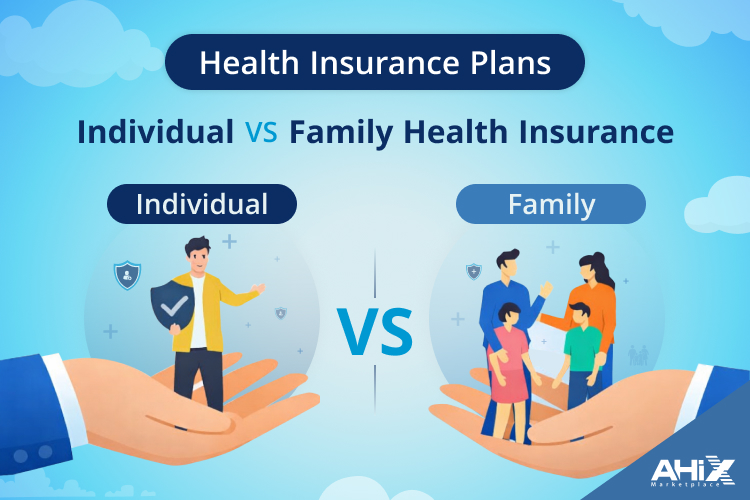
Health insurance isn’t just a financial product. It’s a safety net that protects you and the people you love from unpredictable medical costs. In 2025, with healthcare prices continuing to rise across the United States, selecting the right type of health plan has never been more important.
For most Americans shopping on or off the marketplace, two options stand out:
Individual health insurance plans and family health insurance plans.
At first glance, they might seem similar. Both help pay for doctor visits, hospital stays, prescriptions, and preventive care. But there’s a major difference in how coverage, premiums, and benefits work for each.
In this guide, we’ll walk you through everything you need to know, from how the two plans differ to cost comparisons, tax advantages, and expert recommendations, so you can make an informed decision that fits your life and your budget.
What Is an Individual Health Insurance Plan?
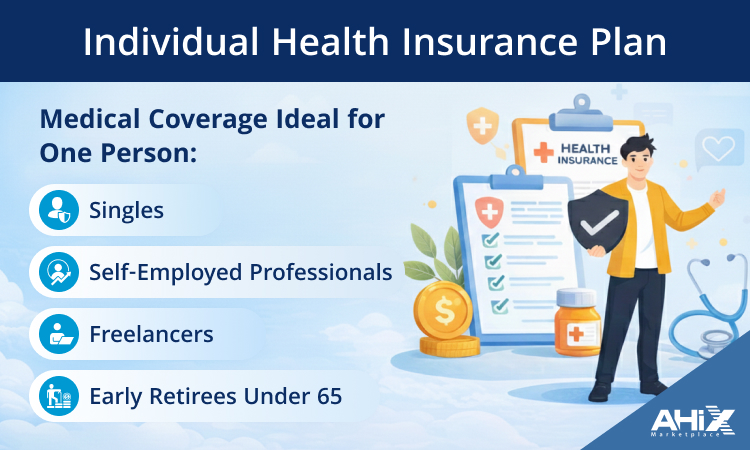
An individual health insurance plan provides medical coverage for one person only. It’s designed for single adults, freelancers, gig workers, or anyone whose employer doesn’t provide insurance. You can purchase it directly through the Health Insurance Marketplace, through a private insurer, or through a licensed broker such as AHiX Marketplace.
How It Works
- You pay a monthly premium based on your age, zip code, income, and tobacco status.
- You have your own deductible, copay, and out-of-pocket maximum.
- Only your healthcare expenses apply to the policy.
- You can qualify for premium tax credits or subsidies based on your income level.
Who It’s Best For
- Single adults and professionals.
- Young adults aging out of parental coverage.
- Self-employed individuals or contractors.
- Retirees under 65 who aren’t yet eligible for Medicare.
Benefits of Individual Plans
- Full control over your benefits and coverage level.
- Freedom to change or upgrade your plan without affecting anyone else.
- Stable coverage of your medical claims doesn’t reduce another person’s benefits.
- Available subsidies through the ACA Marketplace if you qualify.
Example:
If you have an individual Silver plan with a $6,500 annual deductible and $9,100 out-of-pocket max, every covered medical cost you incur applies only to you. No one else shares your benefits or cost cap.
What Is a Family Health Insurance Plan?

A family health insurance plan extends coverage to multiple members under a single policy, typically a spouse and dependent children. Each person is covered, but the plan has shared costs such as the family deductible and out-of-pocket maximum.
How It Works
- One policy covers everyone listed as dependents.
- The premium is based on the number of family members and their ages.
- There are two deductibles:
- Individual deductible – applies per person.
- Family deductible – the total amount the family must pay before full benefits kick in.
- Individual deductible – applies per person.
- Once the family deductible is met, the insurer pays covered expenses for all members for the rest of the plan year.
Who It’s Best For
- Married couples.
- Families with children or dependents.
- Households looking for simplified billing and renewals.
Benefits of Family Plans
- One monthly premium and a single renewal date.
- Simpler administration: one ID card, one insurer, and one deductible limit.
- Can be more affordable than multiple separate individual plans if you have several dependents.
Example:
If a family plan has a $12,000 family deductible and a $3,000 individual deductible, once the total family expenses reach $12,000, all members receive full coverage for the rest of the year.
Individual vs Family Health Insurance: Key Differences
| Feature | Individual Plan | Family Plan |
| Who’s Covered | One person | Multiple family members |
| Premium Basis | Based on the age and location of one insured | Based on the number of members and their ages |
| Deductible | Single deductible | Separate per-person and overall family deductible |
| Out-of-Pocket Max | Applies to an individual | Shared for family |
| Tax Credits (ACA) | Based on individual income | Based on total household income |
| Ideal For | Single adults, self-employed, early retirees | Couples, families with children |
| Plan Management | Separate billing and claims | Single account for all members |
In short:
Individual plans offer personal flexibility and dedicated coverage.
Family plans simplify management and often reduce total costs per person.
Cost Comparison: Individual vs Family Plans in 2025 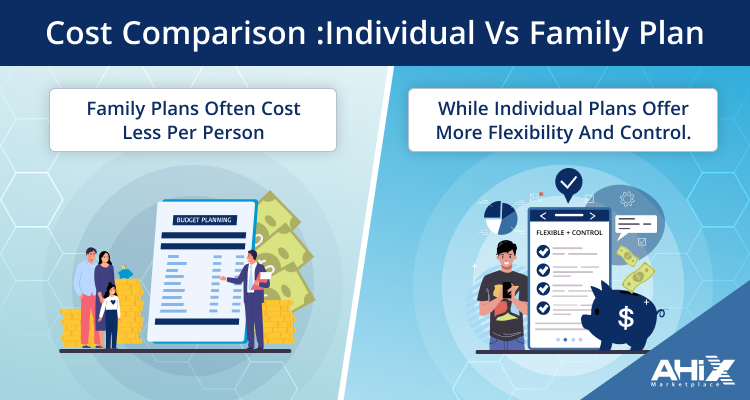
Healthcare premiums continue to rise nationwide, and understanding what to expect helps you budget smartly.
According to the Kaiser Family Foundation’s 2025 Employer Health Benefits Survey, the average annual premium for:
- Individual coverage: about $8,435 per year
- Family coverage: about $24,400 per year
However, when you break it down per member, family plans usually provide better per-person value.
Example Scenario
- Two adults with two children under 18.
- Individual coverage for all four: $8,400 × 4 = $33,600 per year.
- Family coverage: around $24,400 total, a potential savings of $9,000 annually.
Key Takeaways
- Family plans tend to cost less per person.
- Premiums increase with each additional member.
- Older dependents and higher coverage tiers (like Gold or Platinum) increase cost.
- ACA subsidies can dramatically reduce the premiums, especially for households under 400% of the federal poverty level.
Tip: Use a licensed marketplace such as AHiX to estimate your total premium after subsidies. It’s often less than you expect.
Advantages and Disadvantages of Each Plan
Individual Plan Pros
- Coverage tailored to personal needs.
- Easier to switch or upgrade without affecting others.
- Best for freelancers, singles, or people with pre-existing conditions.
Individual Plan Cons
- Not cost-effective for multiple dependents.
- Managing separate renewals for each family member can be time-consuming.
- You’ll need separate deductibles and copays per person.
Family Plan Pros
- Cost-effective when multiple family members need coverage.
- One plan to manage fewer forms and fewer renewals.
- Simplifies claim tracking and tax reporting.
- Family deductible can provide early relief once cumulative spending meets the threshold.
Family Plan Cons
- Premium is based on the oldest member, which can raise costs.
- If one person uses most benefits early, others may pay out of pocket.
- Limited flexibility in changing coverage affects everyone on the plan.
Which Plan Is Better for You?
The right plan depends on your life stage, household structure, and medical needs.
If You’re Single
Go with an individual plan.
You’ll only pay for the coverage you need and can adjust it yearly based on your lifestyle or income.
If You’re Married Without Kids
A family plan may still make sense if both partners want shared benefits and deductible caps.
If You Have Children
A family plan is generally more cost-effective. Many marketplace insurers allow you to add children easily some even include dental and vision bundles for minors.
If You Have Elderly Parents or Dependents
It’s often better to keep parents on separate individual policies. Their higher age can drive up the entire family’s premium.
If You’re Self-Employed
Compare both. You might find a mid-tier family plan cheaper overall if you’re covering a spouse or dependents, but an individual plan with a higher deductible could save you money if you’re healthy.
Factors to Consider Before Deciding
- Household Size and Ages: Larger or multi-age families often benefit from separate policies.
- Budget Flexibility: Consider both monthly premiums and maximum out-of-pocket expenses.
- Expected Healthcare Usage: Families with frequent doctor visits benefit from lower deductibles.
- Network Preferences: Ensure your preferred doctors and hospitals are in-network.
- Subsidy Eligibility: Use your total household income to estimate ACA premium tax credits.
- Future Planning: Choose a policy that allows you to easily add newborns or dependents midyear.
Tax Benefits and ACA Subsidies
Premium Tax Credits
If you buy your health plan through the Health Insurance Marketplace, you may qualify for a federal tax credit that lowers your monthly premium. The amount depends on your modified adjusted gross income (MAGI) and family size.
- Families earning up to 400% of the federal poverty level (around $124,800 for a family of four in 2025) can qualify.
- Credits are applied directly to your monthly premium or claimed at tax time.
Cost-Sharing Reductions (CSR)
If you select a Silver-level plan and your income qualifies, your deductible, copay, and out-of-pocket costs can also be reduced.
Tax Deductions for the Self-Employed
Self-employed individuals can deduct 100% of health insurance premiums (for themselves, spouses, and dependents) from taxable income even without itemizing deductions.
Expert Guidance: When to Choose Each
| Situation | Recommended Plan Type | Reason |
| Single adult or freelancer | Individual | Flexible, customizable, easier to maintain |
| Married couple | Family | Shared deductible, often cheaper combined |
| Family with kids | Family | Broader coverage, simplified billing |
| Family with elderly parents | Mix of both | Seniors should have separate policies |
| Self-employed or early retiree | Depends | Evaluate based on income and tax benefits |
Pro Tip: Some households choose a hybrid approach, one family plan for younger members and separate individual coverage for seniors or members with ongoing medical conditions.
Common Mistakes to Avoid
1. Ignoring total out-of-pocket limits.
A low premium plan might have a high deductible know your annual risk exposure.
2. Including older dependents unnecessarily.
Removing adult children from their own employer coverage can reduce costs.
3. Not reviewing your plan annually.
Rates and benefits change each Open Enrollment period.
4. Assuming all networks are the same.
Verify your doctors and hospitals accept the plan before enrolling.
5. Focusing only on premium price.
Value lies in coverage balance, not just the lowest monthly cost.
How AHiX Marketplace Helps You Compare Smarter
Shopping for health insurance doesn’t have to be confusing.
With AHiX Marketplace, you can compare individual and family health insurance plans side-by-side from top-rated national carriers, including Blue Cross Blue Shield, Cigna, Kaiser Permanente, UnitedHealthcare, and more.
Here’s what AHiX offers:
- Personalized quotes based on your age, location, and household size.
- Subsidy eligibility check to estimate your tax credit instantly.
- Expert licensed advisors who guide you through your options without bias.
- Transparent pricing, no hidden fees or surprise charges.
- Secure enrollment directly through ACA-compliant carriers.
Need help comparing plans?
Visit AHiX.com to see your options and get expert help today. It’s free, fast, and personalized.
FAQs:
1. Main Difference Between Individual and Family Health Insurance Plans
An individual plan covers one person with their own benefits, deductibles, and premiums.
A family plan covers multiple members under one policy with shared deductibles and out-of-pocket maximums. It is easier to manage but combines everyone’s healthcare costs into one pool.
2. Which Plan Is Generally Cheaper?
For most households, a family plan provides better overall value because one premium covers multiple people. However, if family members differ greatly in age or health needs, purchasing separate individual plans may sometimes be more cost-effective and provide better financial protection.
3. Adding Parents or Dependents to a Family Plan
You can add a spouse and children under age 26 to a family plan. Parents or in-laws usually cannot be included and must buy their own coverage through the Health Insurance Marketplace or Medicare.
4. What Happens If One Family Member Uses the Entire Coverage Limit?
If the family deductible or out-of-pocket maximum is reached, the plan covers eligible expenses at 100% for all members for the rest of the plan year. However, if one person meets only their individual deductible, other family members must still meet their own limits.
5. Switching From an Individual Plan to a Family Plan
You can switch plans during Open Enrollment or after a qualifying life event such as marriage, birth, or adoption. Your insurer will adjust your coverage and premium accordingly.
6. Tax Credits and Subsidy Benefits
Both individual and family plans qualify for ACA premium tax credits and cost-sharing reductions when purchased through the Marketplace. Subsidies are based on household income and family size, not the type of plan.
7. Best Plan Options for Senior Citizens
Adults 65 and older are best served by Medicare or an individual plan designed for their medical needs. Family plans typically do not include seniors, but early retirees under 65 can stay on Marketplace plans until Medicare eligibility.
8. How Insurers Calculate Family Plan Premiums
Premiums are based on the number of members, ages, and location. Children under 21 are generally charged lower rates, and insurers typically charge for no more than three children under 21, with additional children included at no extra cost.
9. Maternity and Newborn Coverage
Most Marketplace family plans include maternity and newborn care as essential health benefits under the ACA. Individual plans also offer these benefits, but it’s important to confirm provider networks and any waiting periods before enrolling.
10. Choosing Between an Individual and a Family Plan
-
Single individuals or couples without dependents benefit from the flexibility of individual plans.
-
Families with children or dependents usually save more with a family plan.
-
Mixed-age households may benefit from combining a family plan for younger members with individual coverage for older adults.