
A heart attack, a stroke, or a cancer diagnosis rarely arrives with a warning. What often follows is a stack of bills that your regular health plan was never designed to fully absorb: the deductible you have not met yet, the specialist visits outside your network, the weeks of missed paychecks, the childcare you suddenly need while you recover. This is the exact gap that critical illness insurance is built to fill, and with health insurance premiums climbing sharply again in 2026, more people are asking whether this supplemental coverage is worth adding to their budget. Below, we break down what critical illness insurance actually covers, what it tends to cost, and how to figure out if it makes sense for your situation.
Why This Conversation Matters More in 2026
Health insurance premiums have jumped sharply this year as enhanced premium tax credits expired at the start of 2026, pushing monthly costs up for millions of marketplace enrollees. Faced with higher premiums, a growing number of people are shifting toward high-deductible health plans to keep their monthly payment manageable, which lowers the upfront cost but raises the amount they owe out of pocket if something serious happens. That tradeoff is exactly why critical illness insurance has moved from a niche add-on to a mainstream question people are asking before they finalize their coverage each year. If your deductible went up this year, or you switched to a leaner plan to save on premiums, it is worth pausing to check whether your savings could actually absorb a large medical bill if you needed to.
What Is Critical Illness Insurance?
Critical illness insurance, sometimes shortened to CI insurance, is a supplemental policy that pays you a lump sum cash benefit if you are diagnosed with a covered serious medical condition. Unlike your major medical plan, which pays hospitals and doctors directly for treatment, a critical illness policy pays the money straight to you. There are no restrictions on how you spend it. Some people use it to cover their health plan deductible and out-of-pocket maximum. Others put it toward rent, a mortgage payment, groceries, or travel expenses for specialized treatment. Because the payout is not tied to actual medical bills, it can also replace lost income if a diagnosis keeps you out of work for weeks or months.
How It Differs From Your Regular Health Plan
It helps to think of critical illness insurance as a financial cushion rather than medical coverage. Your ACA plan, employer plan, or Medicare coverage still pays the hospital, the surgeon, and the pharmacy. Critical illness insurance is meant to catch everything that falls outside those payments, which is often more than people expect.
- Health insurance pays providers directly for covered medical services.
- Critical illness insurance pays you directly, in one lump sum, after a qualifying diagnosis.
- The payout can be used for medical costs, but also for rent, utilities, childcare, or lost wages.
- It is not a replacement for major medical coverage and does not meet the requirement for minimum essential coverage.
What Conditions Are Typically Covered
Coverage varies by carrier and policy tier, so it is worth reading the definitions closely before you buy. Most standard policies include the following conditions, though the exact clinical criteria for each one matter a great deal:
- Heart attack, usually defined by specific enzyme levels or ECG changes rather than any chest pain event
- Stroke, typically requiring a permanent neurological deficit lasting more than 24 hours
- Invasive cancer, though many policies exclude early-stage or noninvasive cancers and some exclude skin cancers other than melanoma
- Kidney failure requiring ongoing dialysis
- Major organ transplant
- Coronary artery bypass surgery
- Paralysis, ALS, and in some policies, Alzheimer’s disease
Most policies also require you to survive a specified waiting period after diagnosis, commonly between 14 and 30 days, before the benefit is paid. This detail is easy to overlook but important, since it separates critical illness coverage from a terminal illness rider on a life insurance policy.
What Does Critical Illness Insurance Cost in 2026?
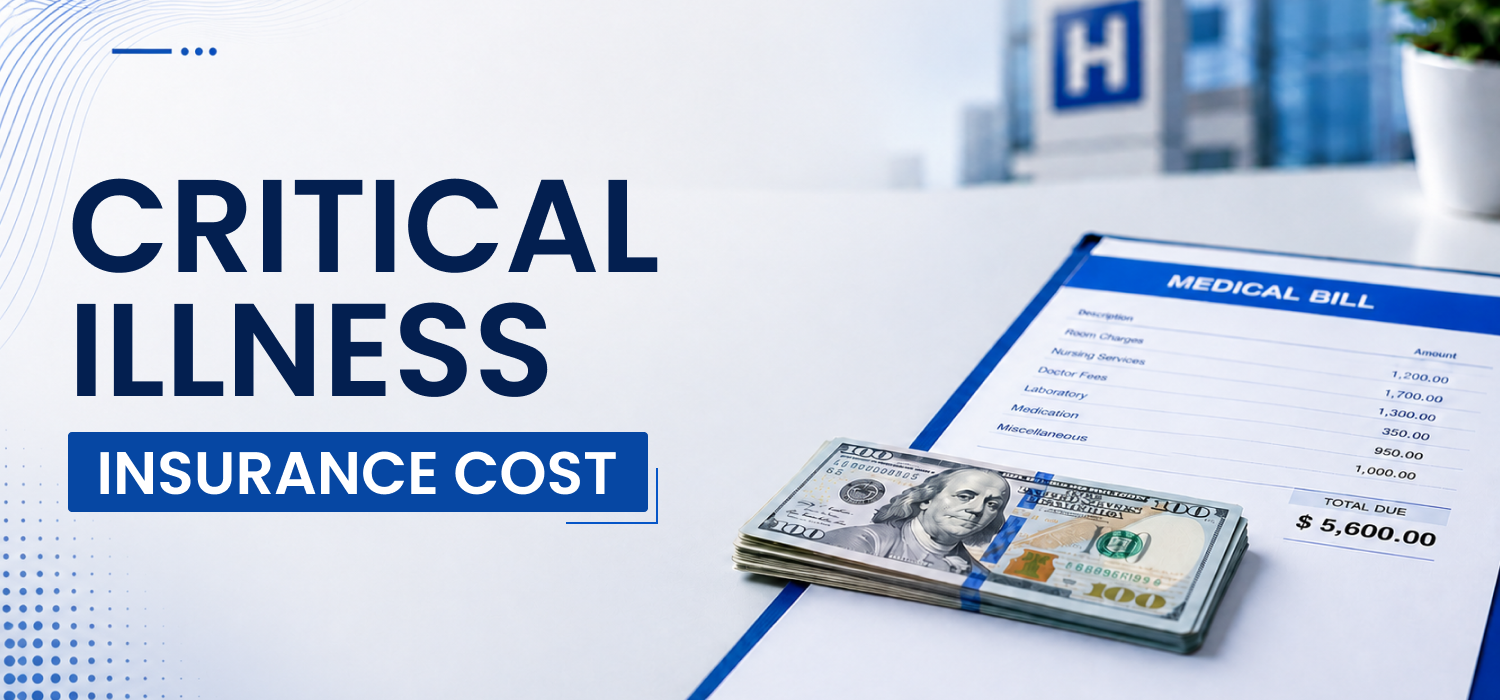
Premiums depend on your age, tobacco use, health history, the size of the lump sum benefit, and any optional riders you add, such as a return of premium rider or a recurrence benefit that pays out again if the same illness returns later. As a general guide, standalone individual coverage for a $20,000 benefit tends to fall into the following ranges.
| Age | Estimated Monthly Premium | Benefit Amount |
| 30 | $18 to $25 | $20,000 |
| 40 | $25 to $35 | $20,000 |
| 50 | $40 to $55 | $20,000 |
| 60 | $65 to $90 | $20,000 |
These figures are general planning estimates rather than a quote. Actual premiums vary by carrier, state, and underwriting, and employer-sponsored group plans are often cheaper than individual policies purchased on your own. Riders that add coverage for hospital confinement, ICU stays, or a recurrence benefit will raise the monthly cost but can meaningfully increase the value of the policy if you have a family history of heart disease or cancer.
It also helps to compare the premium against what a single covered event could actually cost you. Industry data shows cancer patients alone can face several thousand dollars in expenses that a typical health plan does not pick up, ranging from travel to specialized treatment centers, temporary childcare, and the gap between what insurance pays and what providers charge. A monthly premium in the range shown above starts to look reasonable once you weigh it against a lump sum that could cover months of those costs in one payment.
When Critical Illness Insurance Is Worth It

This type of coverage tends to make the most sense for people who are financially exposed to a serious diagnosis in ways their current health plan and savings cannot absorb. Consider it if any of the following describe your situation.
- You are enrolled in a high-deductible health plan and would struggle to pay several thousand dollars out of pocket on short notice
- You have limited emergency savings, generally less than three months of expenses set aside
- You have a family history of heart disease, stroke, or cancer
- You are self-employed, freelance, or work in a role without paid sick leave or short-term disability coverage
- You are the primary income earner in your household, and a period without pay would create real financial strain
When You Might Skip It
Critical illness insurance is not the right fit for everyone, and skipping it can be the smarter financial choice in certain situations.
- You already have a solid emergency fund covering three to six months of expenses
- You carry adequate disability insurance that would replace your income during a long recovery
- Your employer already provides a base level of supplemental coverage at no cost
- You are young, healthy, with no major family health history, and the added premium would compete with your budget for essential coverage like your primary ACA or employer health plan
If money is tight, prioritize your core health insurance first. A critical illness policy is a supplement, not a substitute, and it should never come at the expense of maintaining your primary medical coverage.
How to Choose a Policy That Fits Your Situation
If you decide critical illness coverage makes sense, a few factors will shape both the price and the value you get from it.
- Coverage amount: match the lump sum to your health plan’s deductible and out-of-pocket maximum, plus one to three months of essential living expenses
- List of covered conditions: broader lists that include less common diagnoses generally offer more protection, though they can cost more
- Riders: a return of premium rider refunds part of what you paid if you never file a claim, while a recurrence benefit pays out again if a covered illness comes back
- Preexisting conditions: individual policies typically use full medical underwriting, so applying while you are healthy usually gets you better terms and a lower price
- Group versus individual: employer-sponsored group critical illness plans are often priced lower and may not require the same level of underwriting
Frequently Asked Questions
Is critical illness insurance the same as life insurance?
No. Life insurance pays a beneficiary after you pass away. Critical illness insurance pays you, while you are alive, after a qualifying diagnosis. Some life insurance policies do include a separate terminal illness benefit, which is a different feature entirely.
Does critical illness insurance cover pre-existing conditions?
Usually not right away, and in many cases not at all if the condition was diagnosed or treated before your policy took effect. Individual plans generally use full underwriting, so it is worth applying while you are in good health rather than waiting until a family history concern becomes urgent.
How much coverage should I buy?
A common approach is to size your benefit around your health plan’s deductible and out-of-pocket maximum, then add one to three months of essential living expenses on top. Many people land somewhere between $10,000 and $30,000 in total coverage, though your number should reflect your own budget and risk factors.
Can I use the payout for anything other than medical bills?
Yes. The lump sum is paid directly to you with no restrictions. Common uses include rent or mortgage payments, groceries, childcare, travel for specialized treatment, and lost income while you are unable to work.
Will critical illness insurance replace my health insurance?
No. It is a supplemental benefit and does not meet the legal requirement for minimum essential coverage. It works alongside your major medical plan, not in place of it.
Does the payout count as taxable income?
In most cases, benefits from a critical illness policy are received tax free, similar to other individual disability and supplemental health benefits. Tax treatment can vary depending on how the premium was paid, so it is worth confirming your specific situation with a tax professional.
What happens if I recover fully from the illness?
You keep the payout regardless of your recovery outcome. The benefit is triggered by the diagnosis itself, not by ongoing treatment or the severity of the outcome, as long as you meet the policy’s survival period requirement.
Can I combine critical illness insurance with other supplemental coverage?
Yes, and many people do. Critical illness, accident insurance, and hospital indemnity plans are often sold as complementary products, each addressing a different type of unexpected cost. Combining a couple of these based on your specific risk factors and budget can build a more complete financial safety net around your primary health plan.
The Bottom Line
Critical illness insurance will not be the right fit for every household, but for people carrying a high deductible plan, limited savings, or a family history of serious illness, the extra premium can buy real peace of mind. The best way to know for certain is to compare your current health plan’s deductible and out-of-pocket maximum against a critical illness quote sized to match it. If the numbers line up with a monthly cost you are comfortable paying, it is a reasonable form of financial protection to add. If you would like help comparing supplemental options alongside your existing coverage, a licensed AHiX advisor can walk through the numbers with you and show you real plan choices based on your age, state, and health history.