
On October 1, 2026, federal Medicaid and CHIP eligibility rules for immigrants will change significantly under the One Big Beautiful Bill Act (OBBBA), signed into law on July 4, 2025. An estimated 1.4 million lawfully present immigrants are expected to lose Medicaid or CHIP coverage as a result, including refugees, people granted asylum, humanitarian parolees, and certain survivors of trafficking and domestic violence.
If you or a family member may be affected, this guide explains exactly what is changing, who keeps coverage, who loses it, and, most importantly, what your health insurance options are if your Medicaid coverage ends. There is a lot of misinformation circulating about this topic. Everything in this article is based on the text of the law and official federal and state guidance.
✅ The single most important thing to know
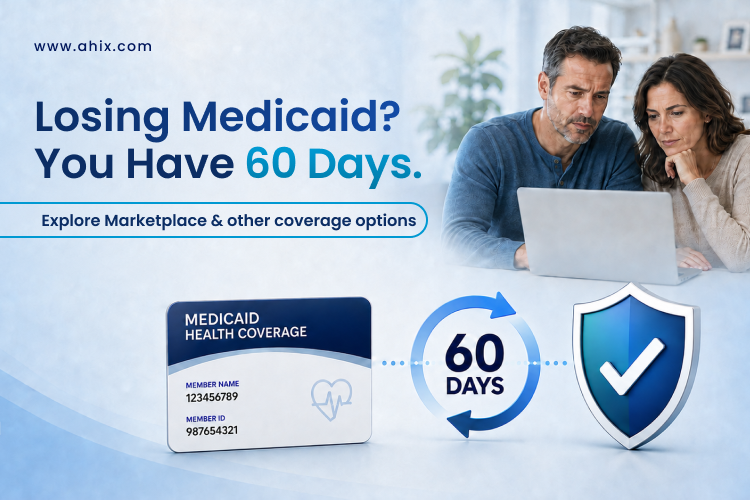
Losing Medicaid or CHIP may qualify you for a Special Enrollment Period to enroll in ACA Marketplace coverage. Through HealthCare.gov, you can enroll up to 60 days before your coverage ends or up to 90 days after it ends. State-based Marketplace deadlines may differ. Comparing plans before your current coverage ends can help prevent a coverage gap. Learn how Special Enrollment Periods work here.
What Is Changing on October 1, 2026?
Section 71109 of the One Big Beautiful Bill Act, titled Alien Medicaid Eligibility, rewrites the list of immigration statuses that qualify for federally funded Medicaid and the Children’s Health Insurance Program (CHIP). Beginning October 1, 2026, federal Medicaid and CHIP funding will only be available for:
- U.S. citizens and U.S. nationals
- Lawful Permanent Residents (green card holders), generally still subject to the existing 5-year waiting period
- Cuban and Haitian entrants
- COFA citizens lawfully residing in the U.S. under the Compacts of Free Association (citizens of the Marshall Islands, Micronesia, and Palau)
Other lawfully present noncitizens may lose access to federally funded full Medicaid or CHIP benefits unless an exception applies. States may also continue providing coverage through programs funded entirely with state money. This is the most significant narrowing of immigrant health coverage eligibility in decades, and it applies in every U.S. state, because it changes the federal funding rules that all state Medicaid programs operate under.
It is important to understand what this change is not. It does not change eligibility for undocumented immigrants, because undocumented immigrants have never been eligible for regular federally funded Medicaid. The change affects people who are in the United States legally and who were previously covered.
How you will find out if you are affected
State Medicaid agencies are required to notify affected members before their coverage ends. Most states began sending notices by mail, text, and email in mid-2026. If you receive a notice, it will explain the change, your coverage end date, and your appeal rights. Some states, like Utah, have also advised affected members to schedule medical appointments and refill prescriptions before October 2026 while coverage is still active. That is practical advice worth following.
Which Immigration Categories May Be Affected?
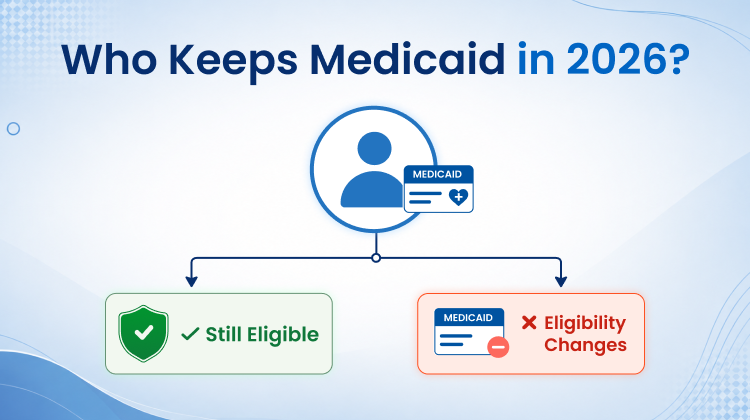
The clearest way to understand the change is a before-and-after comparison. The table below reflects Section 71109 as confirmed by federal guidance and multiple state Medicaid agencies.
| Immigration Status | Medicaid/CHIP Before Oct 1, 2026 | Medicaid/CHIP After Oct 1, 2026 |
| U.S. citizens and nationals | Eligible | Eligible |
| Lawful Permanent Residents (green card holders)* | Eligible (5-yr wait) | Eligible (5-yr wait) |
| Cuban and Haitian entrants | Eligible | Eligible |
| COFA citizens (Marshall Islands, Micronesia, Palau) | Eligible | Eligible |
| Refugees | Eligible | No longer eligible |
| Asylees (granted asylum) | Eligible | No longer eligible |
| Humanitarian parolees (1+ year) | Eligible | No longer eligible |
| Survivors of trafficking (T visa) | Eligible | No longer eligible |
| VAWA self-petitioners (abuse survivors) | Eligible | No longer eligible |
| Undocumented immigrants | Not eligible (unchanged) | Not eligible (unchanged) |
*Lawful Permanent Residents generally must wait 5 years after receiving their green card before Medicaid eligibility begins. Exceptions exist, including for those with 40 qualifying work quarters, veterans and active-duty military families, and people who entered before August 22, 1996. State rules on lawfully residing children and pregnant individuals are covered in the next section.
The groups losing eligibility on October 1, 2026 include some of the most protected statuses in U.S. immigration law: refugees admitted through the formal refugee resettlement process, people granted asylum by an immigration judge or asylum officer, humanitarian parolees who have been present for at least one year, survivors of human trafficking holding T visas, and survivors of domestic abuse with approved VAWA self-petitions.
💡 If your status is changing to a green card
Many refugees and asylees are eligible to apply for Lawful Permanent Resident status after one year in the United States. If you are a refugee or asylee who has not yet applied for a green card, speak with an immigration attorney or accredited representative about your adjustment of status options. Becoming an LPR is the pathway back to federal Medicaid eligibility under the new rules, subject to the waiting period and its exceptions. This is an immigration law question, and a qualified immigration professional is the right person to advise you.
Who May Still Qualify for Medicaid or CHIP?
Even after October 1, 2026, several groups keep their coverage, and a few important state-level options remain in place.
Groups that remain eligible
- ✓ U.S. citizens and nationals, including naturalized citizens
- ✓ Green card holders who have completed the 5-year waiting period, or who qualify for an exception to it
- ✓ Cuban and Haitian entrants
- ✓ COFA citizens from the Marshall Islands, Micronesia, and Palau
Lawfully residing children and pregnant individuals in ICHIA states
Federal law gives states the option, under the Immigrant Children’s Health Improvement Act (ICHIA, also called the CHIPRA 214 option), to cover lawfully residing children and pregnant individuals without the 5-year waiting period. Roughly 28 states plus the District of Columbia have adopted this option. In those states, lawfully residing children and pregnant people can continue to receive Medicaid or CHIP coverage after October 1, 2026, with federal funding. If you have children or are pregnant and lawfully present, check whether your state has adopted ICHIA before assuming coverage ends.
Prenatal coverage under FCEP
Separately, some states cover prenatal care under the From Conception to the End of Pregnancy (FCEP) option, which provides pregnancy-related coverage regardless of the parent’s immigration status. This option also continues after October 1, 2026 in states that have adopted it.
Is Emergency Medicaid Still Available?
Yes. Emergency Medicaid was not eliminated. This is one of the most common points of confusion, so let us be precise about what changed and what did not.
- EMTALA still applies. Federal law (the Emergency Medical Treatment and Active Labor Act) requires hospitals to provide emergency treatment to everyone, regardless of immigration status or ability to pay. OBBBA did not change this.
- Emergency Medicaid still exists. Hospitals can still be reimbursed through Emergency Medicaid for emergency care provided to people who would qualify for Medicaid except for their immigration status.
- What changed is the funding formula. Section 71110 of OBBBA reduces the federal matching rate that expansion states receive for emergency services provided to immigrants who do not qualify for full Medicaid, from the enhanced 90 percent rate down to the state’s regular matching rate, effective October 1, 2026. This is a change in how much the federal government reimburses states, not a change in whether emergency care is available.
The practical takeaway: if you have a medical emergency, go to the emergency room. Hospitals must treat you. However, emergency care is not a substitute for ongoing coverage, and relying on it exposes you to significant bills for anything that does not qualify as an emergency. That is why the options below matter.
Can States Continue Offering State-Funded Coverage?
Yes. The October 2026 change restricts federal funding. It does not prohibit states from covering immigrants using 100 percent state funds. A number of states already operate fully state-funded health programs for immigrants who do not qualify for federal Medicaid, and those programs can continue.
Examples include state-funded coverage programs in California, New York, Illinois, Washington, Oregon, Colorado, and several other states, covering various combinations of children, pregnant people, and adults regardless of immigration status. Coverage varies enormously by state, and some states have scaled programs back due to budget pressure while others have maintained or expanded them.
Because these programs are funded entirely by state budgets, their availability can change from year to year. If you lose federal Medicaid eligibility in October 2026, checking whether your state operates a state-funded program should be one of your first steps. The section on checking your state’s rules below explains how.
📞 Losing Medicaid Coverage? You Have Options and a Deadline
AHiX licensed advisors help you understand what you qualify for after Medicaid ends, including Marketplace plans with subsidies, private coverage, and short-term options. Free to compare, available in all 50 states.
Or call a licensed advisor: 800.800.5735
Health Insurance Options If Medicaid Coverage Ends
Here is the fact that matters most for anyone losing coverage: most lawfully present immigrants can enroll in ACA Marketplace health plans. Losing Medicaid does not mean losing access to health insurance. It means your coverage source changes. Below are the main paths, roughly in the order most people should consider them.
Option 1: ACA Marketplace plan with a premium subsidy
Lawfully present immigrants remain eligible to purchase ACA Marketplace qualified health plans, and as of late 2026, premium tax credits remain available to lawfully present enrollees who meet the income requirements. If your household income is between 100 and 400 percent of the federal poverty level, a subsidy can reduce your monthly premium substantially, sometimes to under $100 per month.
Be aware of an important upcoming date: under OBBBA, premium tax credit eligibility for refugees, asylees, and TPS holders is scheduled to end on January 1, 2027. If you are in one of those categories, 2026 enrollment with a subsidy is still possible, but plan for the possibility of paying full price or exploring other options in 2027. This is one more reason to review your situation with an advisor now rather than waiting.
Option 2: ACA Marketplace plan at full price
Even without a subsidy, Marketplace plans provide comprehensive coverage with no exclusions for pre-existing conditions. A Bronze plan is the lowest-premium ACA option, and as of 2026 all Bronze plans are HSA-eligible, which adds a tax-saving opportunity. Compare tiers in our Bronze vs Silver vs Gold plan guide to understand the tradeoffs.
Option 3: Short-term health insurance
If you need coverage quickly or as a bridge while you sort out longer-term options, short-term health plans are available year-round in most states, often starting within days of application. They are significantly cheaper than ACA plans but do not cover pre-existing conditions and exclude some services. Availability and maximum duration vary by state.
Option 4: Private non-ACA plans
Beyond the Marketplace, private non-ACA health plans offer another route, particularly for healthy individuals seeking lower premiums. These plans are medically underwritten and vary widely, so comparing carefully matters.
Option 5: Employer coverage
If you or your spouse work for an employer that offers health benefits, losing Medicaid triggers a special enrollment right in most employer plans as well. Contact the HR department promptly, because employer plan enrollment windows after losing other coverage are typically 30 to 60 days.
Option 6: State-funded programs
As covered above, some states operate fully state-funded coverage for immigrants excluded from federal programs. Check your state’s program before purchasing private coverage, because state programs are often free or very low cost for those who qualify.
| Coverage Option | Who Can Enroll | Typical Monthly Cost | How to Get It |
| ACA Marketplace plan (with subsidy) | Most lawfully present immigrants, income-based | $50 to $350 after subsidy | 60-day SEP after losing Medicaid |
| ACA Marketplace plan (full price) | Most lawfully present immigrants | $300 to $700 | SEP or open enrollment |
| Short-term health plan | Varies by state, health questions apply | $80 to $250 | Year-round, starts in days |
| Private non-ACA plan | Varies by plan and state | $150 to $400 | Year-round through AHiX |
| Employer coverage | If you or a spouse have a job with benefits | Employer pays a share | At hire or during SEP |
| State-funded programs | Depends entirely on your state | Free or low cost | Your state Medicaid agency |
⚠️ The 60-day window is the deadline that matters
Your Special Enrollment Period runs for 60 days from the date your Medicaid coverage ends. Miss it, and your next chance to enroll in a Marketplace plan is the annual open enrollment period (November 1 to January 15 in most states), which could leave a coverage gap of weeks or months. Mark the date, gather your documents (proof of coverage loss, income information, immigration documents), and start comparing plans before your coverage actually ends so you can transition without a gap.
How to Check Your State’s Eligibility Rules
Because so much of this varies by state, here is a practical checklist for finding your state’s exact rules.
- Watch your mail, email, and texts. Your state Medicaid agency is required to notify you before your coverage changes. The notice will state your coverage end date and appeal rights. Do not ignore official mail from your state Medicaid or health department.
- Contact your state Medicaid agency directly. Every state has a Medicaid helpline. Ask three questions: When does my coverage end? Does this state cover lawfully residing children and pregnant people under ICHIA? Does this state have any state-funded coverage program I may qualify for?
- Check whether your state runs its own marketplace. Eighteen states plus DC run their own ACA exchanges with their own enrollment support, and some offer additional state subsidies. The rest use HealthCare.gov.
- Use AHiX’s state pages. Our state-by-state health insurance guides cover plan availability, short-term plan rules, and carrier options for every state.
- Talk to a licensed advisor. State rules, immigration categories, and plan options interact in complicated ways. A licensed advisor can look at your specific status, income, and state, and lay out your actual options in one conversation, at no cost to you.
💡 A note on getting trustworthy help
Be cautious of anyone who charges fees just to help you enroll in Medicaid or Marketplace coverage, and of unofficial websites that ask for payment or excessive personal information. Enrollment help through official navigators, certified application counselors, and licensed agents like AHiX is free. Immigration legal advice should come only from licensed attorneys or Department of Justice accredited representatives.
📞 Do Not Wait Until October to Understand Your Options
If you or a family member may lose Medicaid coverage under the 2026 changes, the best time to map your alternatives is before your coverage ends. AHiX advisors compare Marketplace, private, and short-term options for your exact situation, in your state, at no cost.
Call 800.800.5735 to speak with a licensed advisor. Real people, no bots.
Frequently Asked Questions
When do the Medicaid eligibility changes for immigrants take effect?
October 1, 2026. This is the effective date written into Section 71109 of the One Big Beautiful Bill Act, which was signed into law on July 4, 2025. State Medicaid agencies are notifying affected members in advance of that date.
Which immigrants will lose Medicaid eligibility in 2026?
Refugees, people granted asylum, humanitarian parolees who have been present at least one year, survivors of human trafficking with T visas, and survivors of domestic violence with approved VAWA self-petitions will lose federal Medicaid and CHIP eligibility on October 1, 2026, along with other previously qualified categories outside the new narrower list.
Which immigrants keep Medicaid eligibility after October 1, 2026?
U.S. citizens and nationals, Lawful Permanent Residents (green card holders, generally after the 5-year waiting period), Cuban and Haitian entrants, and COFA citizens from the Marshall Islands, Micronesia, and Palau. In states that have adopted the ICHIA option, lawfully residing children and pregnant individuals also remain covered.
Can undocumented immigrants get Medicaid?
No, and this did not change in 2026. Undocumented immigrants have never been eligible for regular federally funded Medicaid. The October 2026 changes affect lawfully present immigrants who previously qualified. Emergency medical care remains available to everyone under federal law regardless of immigration status.
Is Emergency Medicaid going away?
No. Emergency Medicaid continues to exist, and hospitals are still required by federal law to provide emergency treatment to everyone. What changed is the federal reimbursement rate that expansion states receive for emergency services provided to immigrants who do not qualify for full Medicaid, which drops to the state’s regular matching rate on October 1, 2026.
Can I buy health insurance if I lose Medicaid because of my immigration status?
In most cases, yes. Lawfully present immigrants can purchase ACA Marketplace plans and private health insurance. Losing Medicaid is a qualifying life event that opens a 60-day Special Enrollment Period. Depending on your income, you may also qualify for a premium subsidy in 2026. Compare your plan options on AHiX or speak with a licensed advisor to see what you qualify for.
Will I get a subsidy for a Marketplace plan if I lost Medicaid due to immigration status?
For 2026 coverage, lawfully present immigrants who meet the income requirements can still receive premium tax credits. Be aware that under OBBBA, premium tax credit eligibility for refugees, asylees, and TPS holders is scheduled to end January 1, 2027. If you are in one of those groups, using your subsidy eligibility in 2026 and planning ahead for 2027 is important.
Do these changes apply in every state?
Yes. The eligibility changes apply nationwide because they change federal Medicaid funding rules. However, states differ in two important ways: whether they cover lawfully residing children and pregnant people under the ICHIA option (about 28 states plus DC do), and whether they operate fully state-funded coverage programs for immigrants excluded from federal Medicaid. Check your state’s rules directly.
What should I do right now if I think I will lose coverage?
Four things. First, schedule any needed medical appointments and refill prescriptions before October 2026 while your coverage is active. Second, watch for official notices from your state Medicaid agency and read them carefully. Third, find out whether your state has ICHIA coverage or a state-funded program you qualify for. Fourth, compare Marketplace and private plan options before your coverage ends so you can enroll during your 60-day Special Enrollment Period without a gap.
Does losing Medicaid affect my immigration status or future applications?
Questions about public charge rules and how benefit use may interact with immigration applications are immigration law questions that depend on your specific status and history. Consult a licensed immigration attorney or a Department of Justice accredited representative. Do not rely on general articles, including this one, for immigration legal advice.
Disclaimer: This article is for educational purposes only and does not constitute legal, immigration, tax, or insurance advice. Medicaid eligibility rules, state program availability, and federal implementation guidance may change. Eligibility for any program depends on your individual circumstances, immigration status, income, and state of residence. For immigration legal advice, consult a licensed immigration attorney or a Department of Justice accredited representative. For your state’s specific Medicaid rules, contact your state Medicaid agency. AHiX Marketplace is operated by J.L. Barnes Insurance Agency, Inc. dba JLBG Health, licensed in all 50 states.