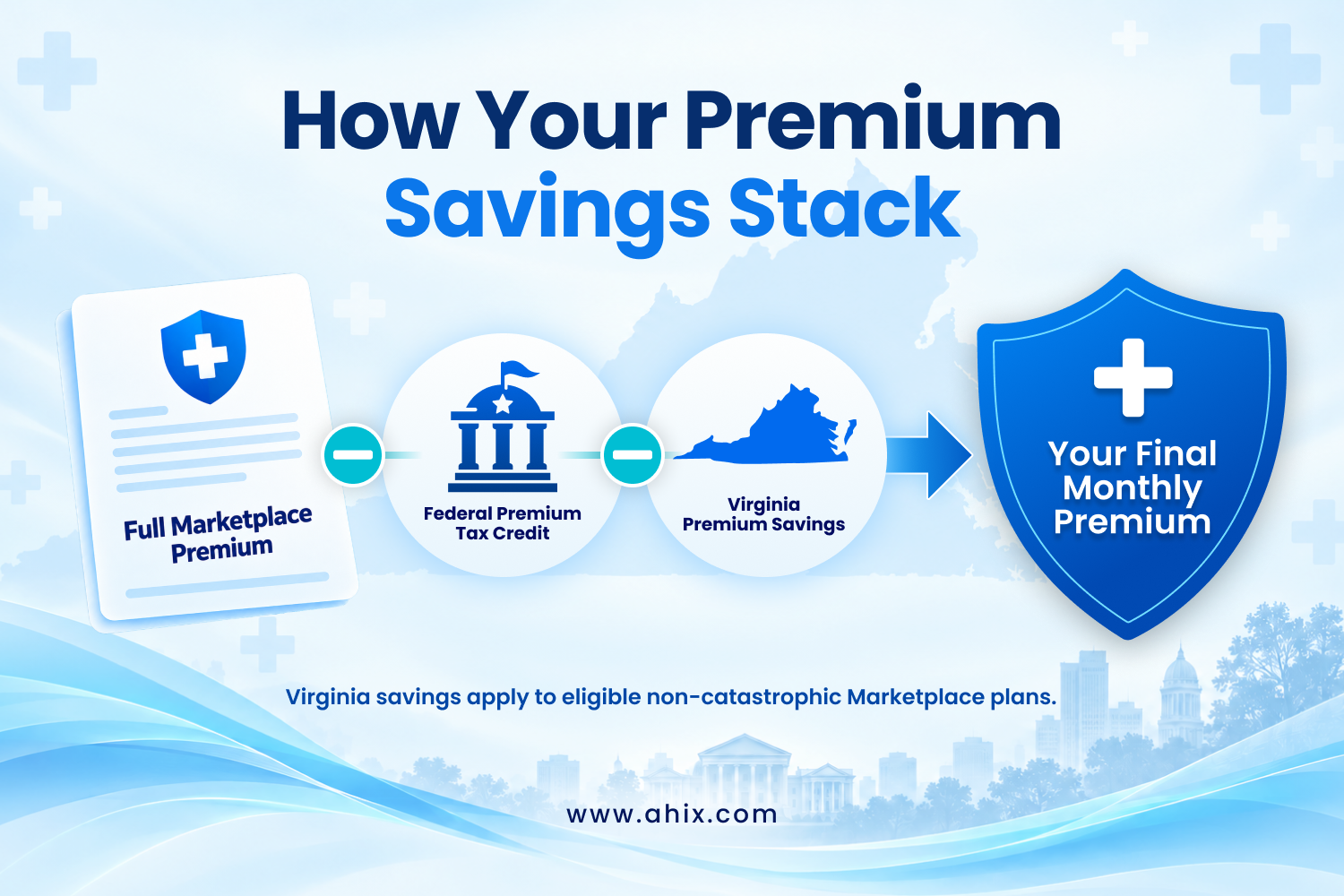


The federal subsidies that kept millions of Americans’ premiums low expired on January 1, 2026. The result was immediate and painful: average after-subsidy marketplace premiums jumped from $113 a month in 2025 to $178 a month in 2026, a 58 percent increase. For households earning just above the income cutoff, unsubsidized premiums in many states now run $500 to $900 a month for a mid-tier Silver plan.
It is not a coincidence that searches for “cheap health insurance” spiked +160 percent in early 2026. Millions of people are scrambling for answers and most of the information they find online is either outdated or written for people who already understand how the system works.
This guide is different. If you are staring at a premium bill you cannot pay, or you dropped coverage because the math stopped making sense, you will find real options here. Not vague suggestions. Actual strategies with actual numbers, written plainly.
What Actually Happened to Health Insurance Costs in 2026
Let us be direct about what changed, because many people feel blindsided and deserve a straight answer.
From 2021 through 2025, Congress temporarily expanded the Premium Tax Credit (PTC) through a law called the American Rescue Plan Act. Those enhanced subsidies did two things:
- They made premiums dramatically cheaper for people already qualifying for subsidies
- They extended eligibility to households earning above 400 percent of the federal poverty level, who had previously received nothing
Those enhancements expired on December 31, 2025, and Congress did not renew them.
The result? Average after-subsidy marketplace premiums went from $113 per month in 2025 to $178 per month in 2026, a 58 percent increase, and for families earning over 400 percent FPL, the jump was even sharper because they no longer get any subsidy at all. In many states, unsubsidized individual premiums now run $500 to $900 per month for a mid-tier Silver plan.
| Is this permanent?
As of mid-2026, no legislation has been passed to restore the enhanced subsidies. Congress could act during the year, but planning around a maybe is not a strategy. The options in this guide work right now, under current law, regardless of what happens in Washington. |
The people hardest hit fall into a few clear groups: self-employed individuals, freelancers and gig workers, early retirees, and small business owners who were previously subsidized but now earn just enough to lose all help. If you are one of them, keep reading
Understanding the Subsidy Cliff and Whether You Are Falling Off It
The phrase subsidy cliff sounds technical, but it describes a brutally simple situation: earn one dollar too much, and your entire premium tax credit disappears. Not gradually. All at once.
Here is how the income thresholds work in 2026, reverted to their pre-2021 rules:
| Household Size | FPL (100%) | Subsidy eligible up to | Cliff (subsidy = $0) |
| 1 person | ~$15,650 | $62,600 | $62,601+ |
| 2 people | ~$21,150 | $84,600 | $84,601+ |
| 3 people | ~$26,650 | $106,600 | $106,601+ |
| 4 people | ~$32,150 | $128,600 | $128,601+ |
Based on 2026 federal poverty guidelines. Thresholds rounded for clarity. Your actual subsidy amount depends on your specific income, age, and the benchmark Silver plan cost in your state.
Here is the part that catches people off guard: it is your modified adjusted gross income (MAGI) that counts, not just your salary. That includes freelance income, investment gains, rental income, taxable Social Security, and any other source the IRS considers income. If you are close to the cliff, there are legal strategies to move the number. More on that in the next section.
| I thought I made $65,000. Turns out my brokerage dividends pushed me to $63,200. I lost my entire subsidy over $600 in dividends I barely noticed. Now I know. |
| Not sure if you are eligible for a subsidy?
Our licensed advisors can run your numbers in minutes. There is no cost to check, and knowing where you stand before you choose a plan can save you thousands. Call 800.800.5735 or use our online comparison tool to see your actual subsidy eligibility right now. |
Option 1: Strategically Lower Your Taxable Income to Reclaim Your Subsidy
If you are earning slightly above the subsidy cliff, this is worth looking at carefully, because the subsidy you would gain can easily be worth $4,000 to $12,000 per year. That makes even aggressive tax planning strategies pay off dramatically.
Health Savings Account (HSA) Contributions
Contributions to an HSA reduce your MAGI dollar for dollar. In 2026, you can contribute up to $4,300 if you are single or $8,550 for a family, and if you are 55 or older, you can add an extra $1,000. This is only available if you have a qualifying high-deductible health plan, but in 2026, thanks to the Working Families Tax Cuts Act, Bronze and even Catastrophic plans now qualify for HSA pairing in most states. That is brand new and hugely valuable. More on that in Option 4 below.
Traditional IRA or SEP-IRA Contributions
If you are self-employed or have freelance income, contributing to a SEP-IRA or traditional IRA lowers your MAGI. A self-employed person under 50 can shelter up to 25 percent of net self-employment income in a SEP-IRA, capped at $69,000 in 2026. If you are close to the cliff, maxing this out might be the single move that puts you back under the threshold and restores your premium subsidy.
Timing Capital Gains
If you have investments in taxable brokerage accounts, consider whether you can defer realizing capital gains to next year or harvest losses this year to offset gains that would push your income over the cliff. This requires coordination with your accountant, but the dollar impact can be significant.
| Real example
A freelance designer earning $64,000 in 2026 (just over the cliff for a single person) makes a $4,300 HSA contribution. Their effective MAGI drops to $59,700, which is under the threshold. They now qualify for a premium tax credit worth roughly $300 to $500 per month, saving up to $6,000 per year. The HSA contribution itself is also tax-deductible and grows tax-free. This is a legal, legitimate, high-impact strategy. |
Option 2: Switch to a Short-Term Health Plan (Now Available Up to 36 Months)
Short-term health insurance has always been a useful bridge, but a 2024 federal rule had capped coverage at just a few months. That changed in 2025 and 2026.
Federal regulators have paused enforcement of the stricter cap while they reconsider the rules. Carriers can now legally offer short-term plans for up to 36 months in many states. This makes short-term plans a genuinely serious alternative for people who:
- Are in good health with no major pre-existing conditions
- Earn too much for subsidies and cannot afford full ACA premiums
- Need temporary coverage during a job transition, move, or gap in employment
- Are under 30 and want lower-cost, basic protection
What short-term plans typically cover
- Doctor visits and specialist care
- Emergency room and urgent care
- Hospital stays and surgery
- Some prescription drug coverage (varies by plan)
What they typically do not cover
- Pre-existing conditions
- Mental health and substance use disorder services
- Maternity care
- Preventive care at no cost (an ACA requirement that does not apply to short-term plans
| Important: state rules vary significantly
Short-term plan availability and maximum duration depend heavily on where you live. States like Florida, Indiana, Missouri, Georgia, and Ohio allow up to 36 months. Others limit plans to 3 to 12 months. A few states have banned them entirely. Check your state’s short-term options on AHiX. |
The cost advantage can be dramatic. Short-term plans often run 50 to 80 percent cheaper than comparable ACA plans. For a healthy 35-year-old, that might mean $120 to $180 per month instead of $400 to $600 per month. The tradeoff is the coverage gaps, which is exactly why it is important to compare both options side by side before you decide.
| AHiX shows you short-term and ACA plans together so you can see the real cost difference before you commit to anything. |
Option 3: Explore Non-ACA and Private Health Plans
Many people do not realize that non-ACA health plans exist and are completely legal. These are private insurance products that do not conform to all ACA requirements, which means they are not eligible for subsidies, but they also do not follow the same pricing rules and can often be significantly less expensive for healthy individuals.
Types of non-ACA private plans worth knowing about
Health sharing plans
Also called health care sharing ministries, these are not insurance. They are cost-sharing arrangements among members. They can be dramatically less expensive, sometimes $100 to $300 per month for a single person, but coverage is limited and there are no guaranteed benefits. Best for very healthy individuals with low medical usage who want catastrophic protection.
Supplemental and fixed-benefit plans
These pay a fixed dollar amount per medical event, for example $500 per day for hospitalization. They are not a substitute for major medical coverage, but can be layered on top of a lower-cost primary plan to fill gaps in your deductible and out-of-pocket costs, which is actually one of AHiX’s core offerings.
| Plan Type | Avg Monthly Cost | Pre-existing Conditions | ACA-Compliant | Best For |
| ACA Silver Plan | $350 to $700 | Yes – Covered | Yes | Subsidy-eligible individuals |
| ACA Bronze + HSA | $200 to $450 | Yes – Covered | Yes | Healthy people saving for retirement |
| Short-Term Plan | $80 to $250 | Usually not covered | No | Healthy people in gap situations |
| Non-ACA Private Plan | $150 to $400 | Varies by plan | No | Healthy, above-cliff earners |
| Health Sharing Plan | $100 to $300 | Usually not covered | No | Very healthy, faith-based eligible |
Option 4: Use a Bronze + HSA Strategy to Cut Your Real Cost
This is one of the most underused and highest-impact strategies available in 2026, and it just got better thanks to new legislation.
The Working Families Tax Cuts Act, signed in 2026, expanded Health Savings Account eligibility to include all Bronze plans and Catastrophic health plans, not just the narrow set of high-deductible plans previously eligible. This is a genuinely significant change.
How the Bronze + HSA strategy works
- Choose a Bronze-tier ACA plan from AHiX, which has the lowest monthly premiums of the ACA-compliant options (typically 30 to 50 percent cheaper than Silver plans)
- Open a Health Savings Account (HSA) at a bank or credit union
- Contribute to your HSA pre-tax, up to $4,300 for individuals or $8,550 for families in 2026
- Use HSA funds to pay your deductible and out-of-pocket costs when you need care
Here is why this strategy is powerful:
✓ Your HSA contributions reduce your federal taxable income, lowering your overall tax bill
✓ Money in an HSA grows tax-free and rolls over indefinitely. No use it or lose it rules
✓ If you are mostly healthy and do not use much care, your HSA becomes a second retirement account
✓ Your low Bronze premium plus HSA savings often results in less total annual spending than a mid-tier Silver plan, even in years with moderate medical use
| Quick math example
A 42-year-old individual in Georgia earns $58,000, which is just under the subsidy cliff. They compare a Silver plan at $410 per month versus a Bronze plan at $245 per month. The Bronze plan saves them $1,980 per year in premiums. They put those savings into their HSA. If they have a good year health-wise, they have saved nearly $2,000 AND grown their tax-free health fund. If they have a rough year, the HSA covers the gap. They come out ahead either way. |
For a deep dive on plan tiers, see our guide: Bronze vs Silver vs Gold vs Platinum Health Insurance: Which Plan Is Right for You in 2026?
Option 5: If You Are a Small Business Owner, ICHRA Changes Everything
If you own a small business, employ even a handful of people, or run a startup, there is a model for providing health benefits that most business owners have never heard of. It could save you tens of thousands of dollars per year compared to traditional group health insurance.
It is called an ICHRA (Individual Coverage Health Reimbursement Arrangement).
The basic idea
Instead of choosing one group health plan for all your employees (which locks everyone into the same network, same coverage, and same cost), you:
- Set a monthly dollar allowance per employee (you decide the amount)
- Employees choose their own individual health plan from AHiX or any marketplace that fits their personal needs and doctor preferences
- You reimburse employees tax-free up to their allowance
- Every dollar you reimburse is fully tax-deductible as a business expense
For a business owner who has been paying $1,200 to $2,000 per month per employee for group coverage, this can represent a dramatic reduction in cost while actually giving employees more flexibility and choice than they had before.
| AHiX specializes in ICHRA setup for small businesses
We have helped hundreds of small businesses set up ICHRA arrangements, from compliance guidance to connecting each employee to the right individual plan. There is no complex group underwriting, no minimum participation requirements, and no annual rate renewals. Read our full ICHRA setup guide or call us at 800.800.5735 to learn what this looks like for your specific business. |
Already Enrolled but Struggling? You Still Have Moves
If you are currently enrolled in a 2026 Marketplace plan and your costs have become unmanageable since January, do not just drop your coverage and hope for the best. Here are legitimate options that do not require waiting until the next open enrollment period.
Update your income estimate mid-year
If your income has changed since you enrolled, you can update your Marketplace application right now. If your updated income puts you below the subsidy threshold, your premium tax credit will be recalculated immediately, lowering your monthly bill for the rest of the year.
Qualify for a Special Enrollment Period (SEP)
You can change or drop to a lower-cost plan outside of open enrollment if you have had a qualifying life event in the past 60 days. Events that trigger a SEP include:
- Loss of other coverage (job loss, COBRA expiration, loss of a parent’s plan)
- Marriage or divorce
- Having a baby, adopting a child, or placing a child for foster care
- Moving to a new state or a new coverage area
- Gaining citizenship or lawful immigration status
See our full guide to qualifying life events and how to enroll for complete details on each trigger and timeline.
Drop to a lower metal tier
If you are enrolled in a Gold or Silver plan you can no longer afford, mid-year changes during a SEP can allow you to shift to a Catastrophic plan (if you are under 30 or qualify for a hardship exemption) or a Bronze plan. Your out-of-pocket exposure increases, but your monthly premium drops significantly, and you stay covered.
Why Skipping Coverage Entirely Is Still the Most Expensive Choice
We understand the math. If you are unsubsidized and looking at $500 or more per month for health insurance, going without coverage feels like an obvious financial decision. It is not, and here is why.
There is no longer a federal individual mandate penalty for being uninsured (the ACA penalty was repealed in 2019). So going without coverage will not cost you on your taxes. But it can cost you in ways that are far more devastating.
The numbers on going uninsured
- 3-day hospital stay in the US: $30,000 or more on average
- Emergency appendectomy: $15,000 to $40,000
- Cancer diagnosis at the earliest stage: $100,000 to $400,000 in treatment costs
- A single ambulance ride: $1,200 to $2,500
Medical debt is the leading cause of personal bankruptcy in the United States. One event, an accident, an unexpected diagnosis, a surgery, can erase years of savings faster than any premium increase ever could.
The goal of this guide is to show you that you have real options between an expensive ACA plan and no coverage at all. Short-term plans, non-ACA private plans, Bronze plus HSA combinations. There are affordable paths. The key is finding the right one for your situation. And that is exactly what AHiX is here to help you do.
Your Next Steps: Get a Real Comparison in Under 2 Minutes
If you have read this far, you are taking your health coverage seriously, and you deserve clear, honest guidance. Here is what to do right now, based on your situation:
If you earn below $62,600 (single) or $84,600 (family of 2)
You likely qualify for a subsidy. Browse ACA-qualified plans on AHiX and see your estimated tax credit applied in real time. Your monthly cost may be significantly lower than you expect.
If you earn above the subsidy cliff but want coverage
Compare non-ACA and private plans alongside short-term options on AHiX. Also, seriously consider the Bronze plus HSA strategy described in Option 4 above. It is the smartest move for healthy, above-cliff earners.
If you are self-employed or a gig worker
Your self-employment health insurance premiums may be fully deductible. Talk to a tax professional about how your premium choice affects your MAGI. Then explore both ACA and non-ACA options on AHiX for your situation.
If you own a small business
Explore the ICHRA model before your next group renewal. It could save you 30 to 50 percent on employee health costs while giving your team more flexibility. Start with our ICHRA guide or call us directly.
If you missed open enrollment
You may still qualify for a Special Enrollment Period based on a recent life event, or a short-term plan is available year-round. Do not assume you are locked out. Check your options first.
Frequently Asked Questions
What is the health insurance subsidy cliff in 2026?
The subsidy cliff is the income threshold above which your entire premium tax credit disappears, not gradually, but completely. In 2026, for a single person, that threshold is approximately $62,600 in modified adjusted gross income (MAGI). Earn one dollar over the threshold, and you receive no subsidy at all, meaning you pay the full unsubsidized premium.
Can I still get health insurance if I missed open enrollment?
Yes. You can enroll outside of open enrollment if you have had a qualifying life event in the past 60 days, such as losing other coverage, getting married, having a baby, or moving to a new state. Short-term health plans are also available year-round and do not require open enrollment at all.
Are non-ACA health plans legal and legitimate?
Yes. Non-ACA plans, including short-term health plans, private medically underwritten plans, and health sharing plans, are legal and sold by licensed insurers and brokers. They simply do not have to comply with all ACA requirements, which means they often cost less but may not cover pre-existing conditions or all essential health benefits. AHiX helps you compare these options side by side so you understand exactly what you are getting.
How do HSAs work with Bronze plans in 2026?
Thanks to the Working Families Tax Cuts Act, Bronze and Catastrophic plans are now eligible to be paired with a Health Savings Account in most states. You contribute pre-tax dollars to your HSA (up to $4,300 for individuals or $8,550 for families in 2026), which reduces your taxable income and can be used to pay medical expenses tax-free. Unused funds roll over every year and can grow for retirement. It is one of the most tax-efficient strategies available for above-cliff earners.
What is ICHRA, and is it right for my small business?
An Individual Coverage HRA is an employer-funded benefit that lets you reimburse employees for their individual health insurance premiums tax-free, rather than buying a group plan. It works for businesses of any size, has no participation minimums, and every dollar you reimburse is a deductible business expense. Read our full ICHRA guide or call 800.800.5735 to talk through whether it makes sense for your team.